
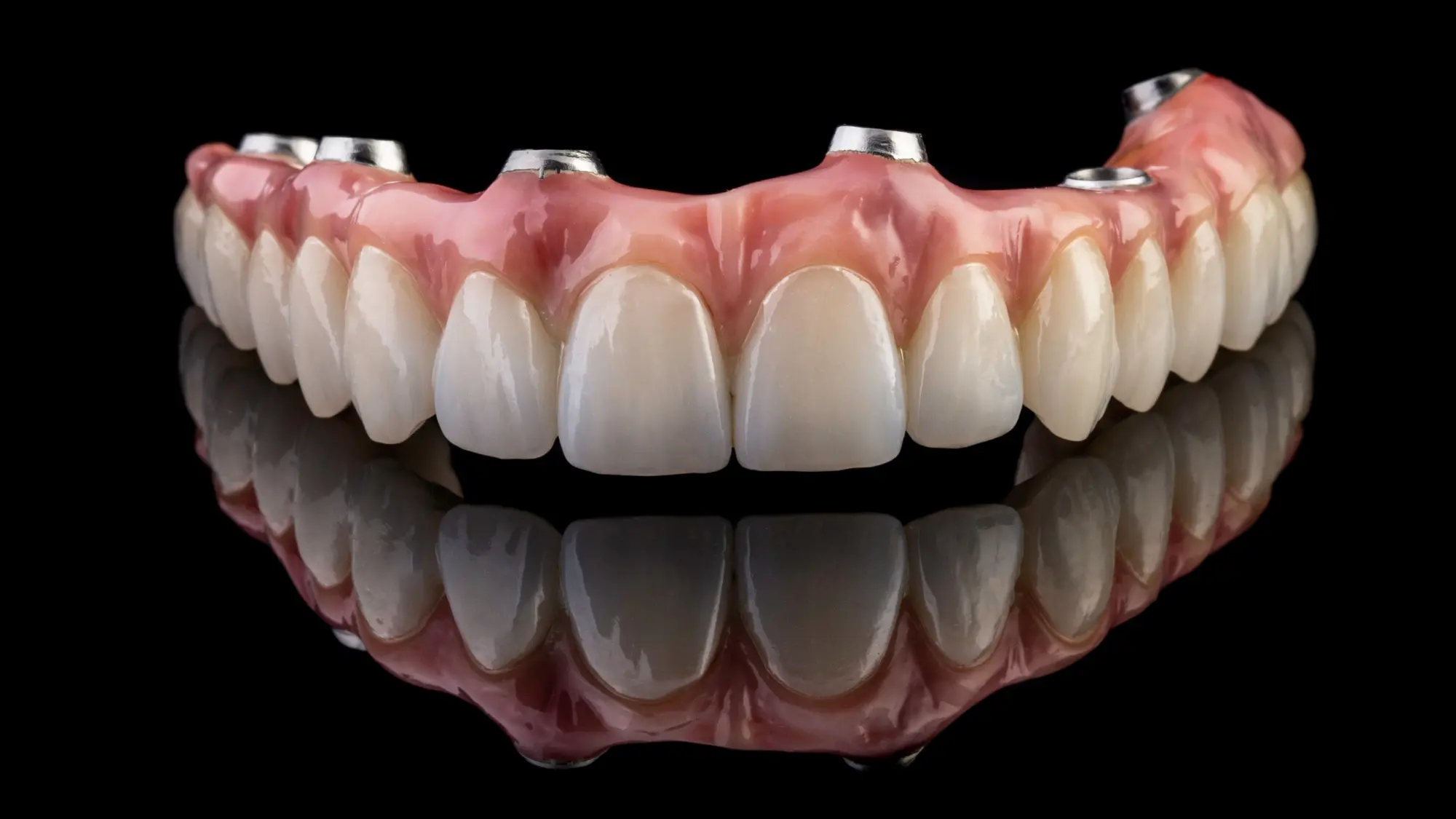
Many people have the same experience; You’re missing a tooth, or have a tooth that needs to be extracted, and your dentist tells you that ‘you would be a good candidate for a dental implant.’ Your Dentist explains that you can restore the functionality of your bite with an artificially implanted tooth. And you think to yourself: “How is this possible?” or simply “Since when has this been a thing?”
Dental Implants may feel like a new scary technology but implants have a long history in dentistry.
Early Dental Implant History
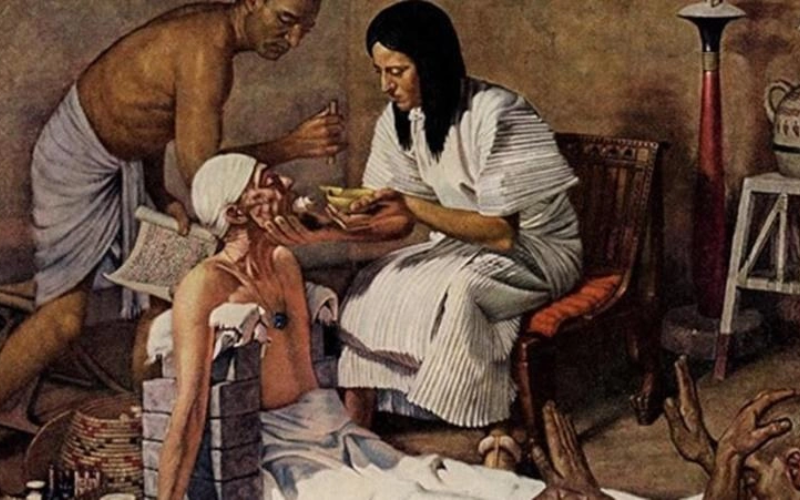
As early as 2500 BC, ancient Egyptians attempted stabilizing their teeth with the use of gold wire. And in 300 AD, Phoenicians attempted to restore oral function by creatively carving teeth from ivory and stabilizing it with gold wire to create a fixed dental bridge (Source)!
The emergence of modern dental implants came about through various experimentations that left significant impact on our understanding of restorative dental procedures and our oral health overall. In the early 1800s, J. Maggiolo would be the first to implant a gold tube into a fresh tooth extraction site. The Result? The gold implant tube created inflammation around the site and the implant eventually failed. Although J. Maggiolo’s experiment proved to be a failure, his studies paved the way for modern Implantology (Source).
The 1900s and Beyond
We learned from these early experiments that some implant materials seemed to wo
rk better than others. Gold, Silver, Porcelain and Iridium were all used as implants in these early experimental years. However,
it wasn’t until 1913 that implants started to resemble their modern counterparts. Dr. EJ Greenfield implanted a hollowed Iridium-Platinum cylinder as an artificial root. And in the 1930’s, Brothers Dr Alvin and Dr. Moses Strock implanted orthopedic screws and successfully restored missing teeth in dogs and in humans (Source). The Strock brothers would be the first to utilize biocompatible metals and are considered to be the first to successfully complete a implant procedure in the jaw bone (Source).

Further advancements were made throughout the 1900s, including the patented cylindrical endosseous (in the bone) implant. And modifications that ensured the longevity of the implant as well as various tools to ensure greater procedure success.
By the 1980s, dental implants, though continually evolving, were no longer considered a new discovery. However, despite implants generally becoming an established procedure — the “All-on-X” technique was just emerging. In the 1990s, Portuguese dentist and researcher Dr. Paulo Malo pioneered the All-on-4 Protocol. This procedure allowed him to place an implant retained denture on patients with extensive bone loss and tooth loss. This technique helped increase stability, functionality, decrease healing time and lower overall costs for patients. After this came the All-on-6 and All-on-8 Dental Implant procedure — chosen for additional stability depending on the patient’s needs (Source).
Dental Implants Today
Today dental implants are no longer an experiment in restorative care but the treatment of choice for many practitioners and patients alike. With an extensive history, dental implants are now considered a safe and effective procedure provided by many dental practices today. Want to learn more about dental implants? Call today or schedule a free dental implant consultation.